Artificial Intelligence (AI) is all around us – and it is a field that is still growing rapidly. But can it be used to address major environmental challenges as well? We discussed this issue with experts from academia and industry during this year’s Applied Machine Learning Days AMLD 2019 – and gained exiting insights into the future of Machine Learning in environmental sciences and engineering.
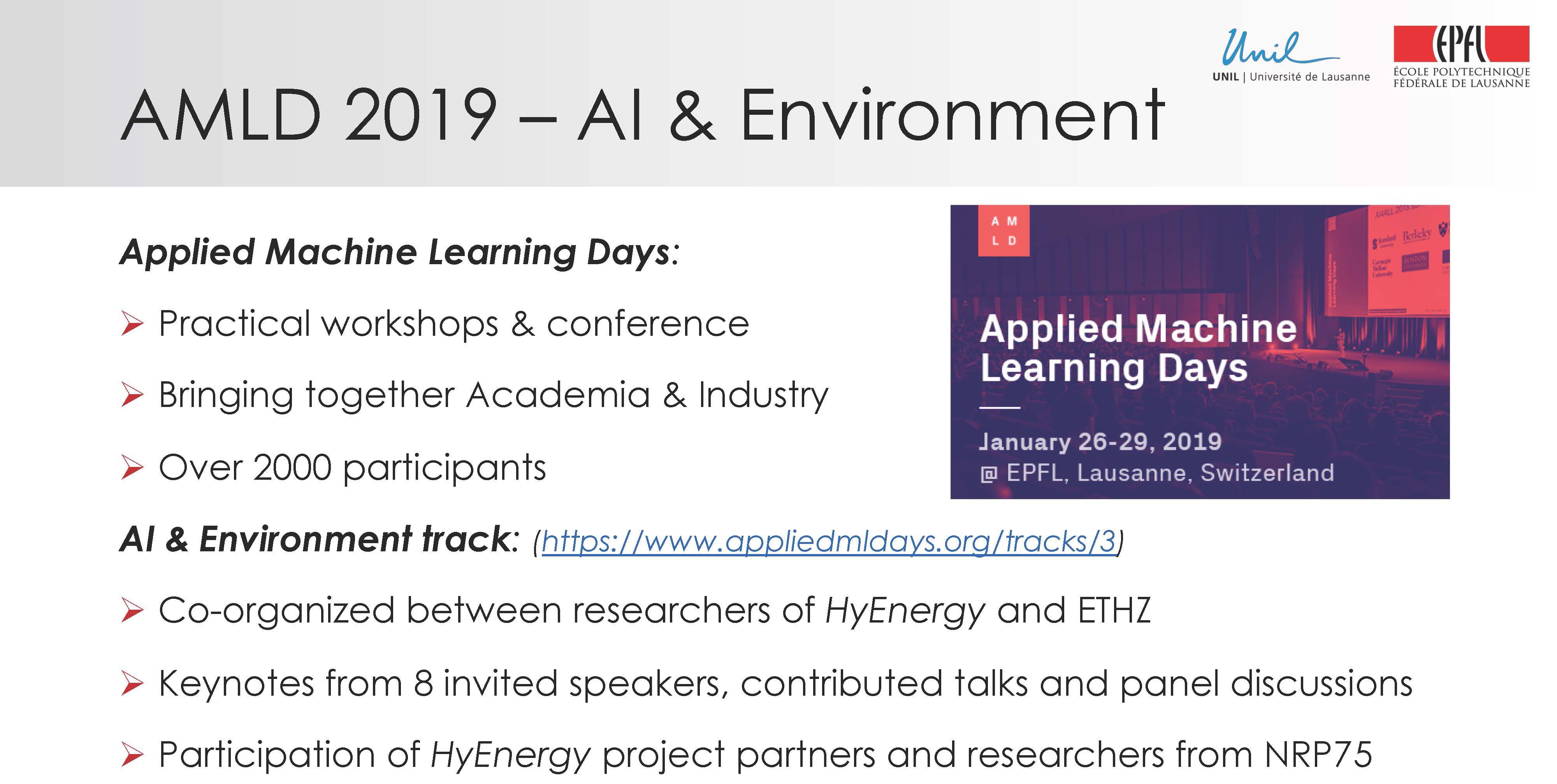
In January 2019, a team of researchers from EPFL, UNIL, ETHZ and University of Oxford organized a session on AI & Environment during the Applied Machine Learning Days in Lausanne. The conference had over 2000 attendees and aimed to bring together experts from academia and industry – to facilitate the communication between Machine Learning (ML) experts and specialists from different fields of application. For the first time, the organizers hosted 16 tracks on specific applications of AI – one of which was Environment.
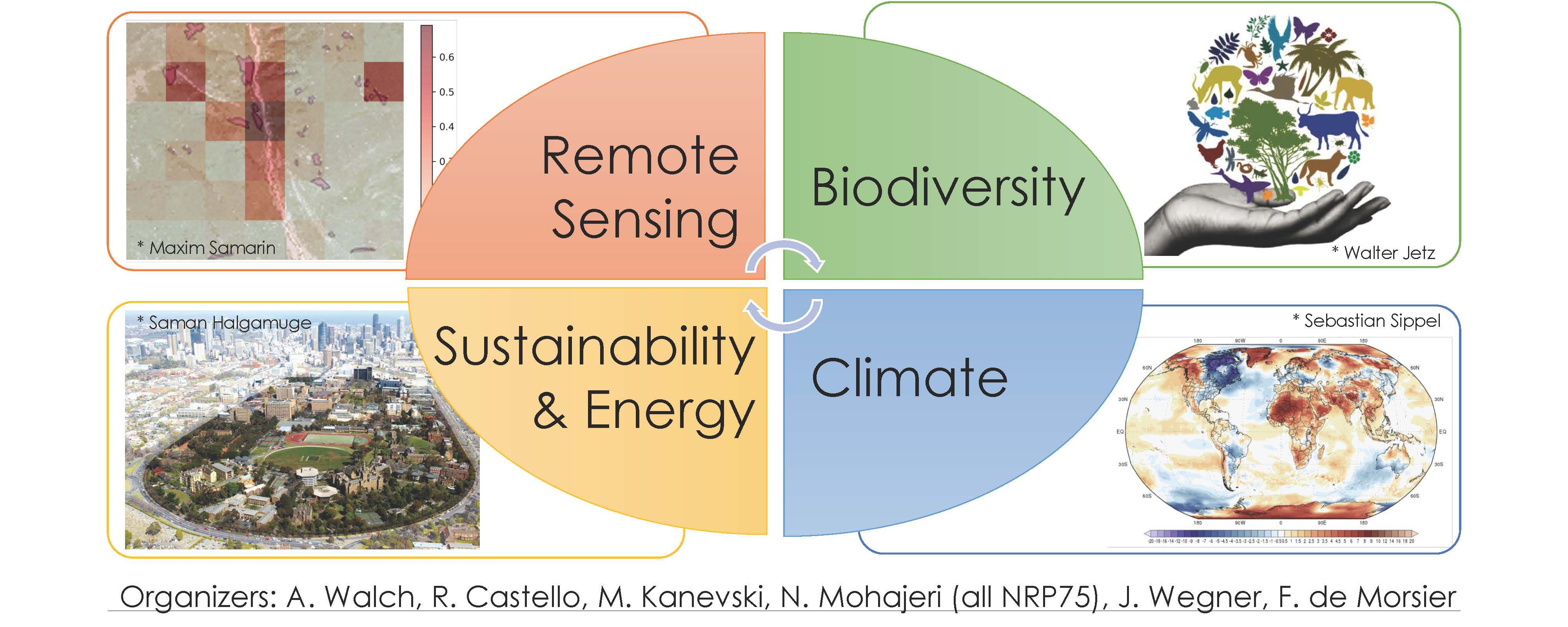
During the track, we welcomed a combination of invited speakers and short talks and hosted two panel discussions between our experts. As Environment is a broad field, we separated it into 4 sessions that covered one full day. During the first half we addressed the areas of Remote Sensing and Biodiversity, while during the second half we discussed ML applications and challenges in the fields of Sustainability, Energy and Climate.
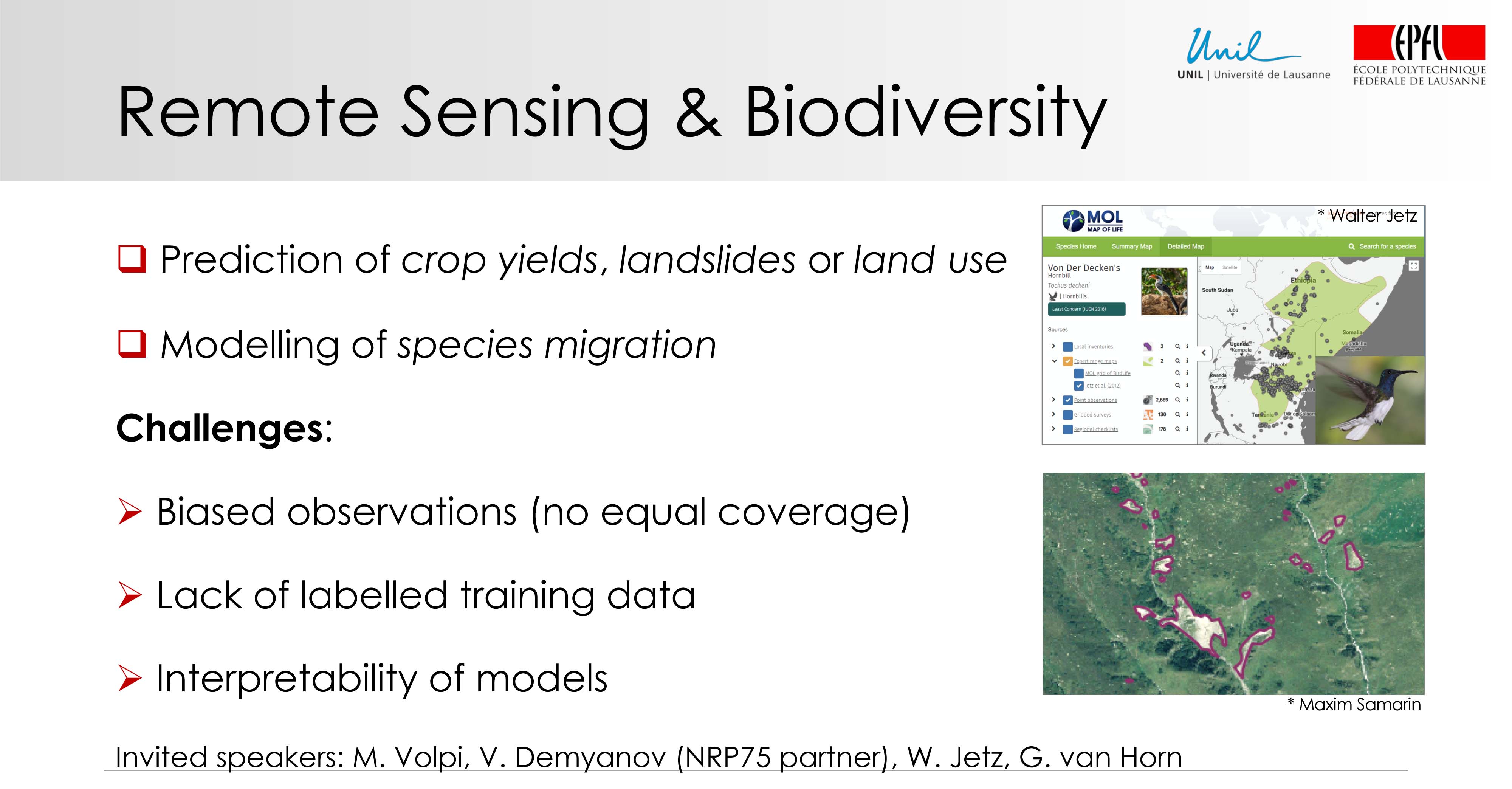
In our session on Remote Sensing and Geosciences we saw some impressive examples of how Machine Learning, in particular deep and convolutional neural networks, can be used to identify landslides, to predict crop yields and to determine land use. Our experts in biodiversity showed how to model the migration of species and presented iNaturalist.org, a platform to collect observations of plants and animals all over the world. Our panel discussed the challenges of ML for remote sensing and biodiversity. These include bias in the data, for example caused by the high coverage of species observations in Europe, North America and Asia, but a lack of observations in Africa and parts of South America. Another important challenge is the lack of labels in many large datasets, and the interpretability of models like Neural Networks, which are mostly treated as “black boxes”.
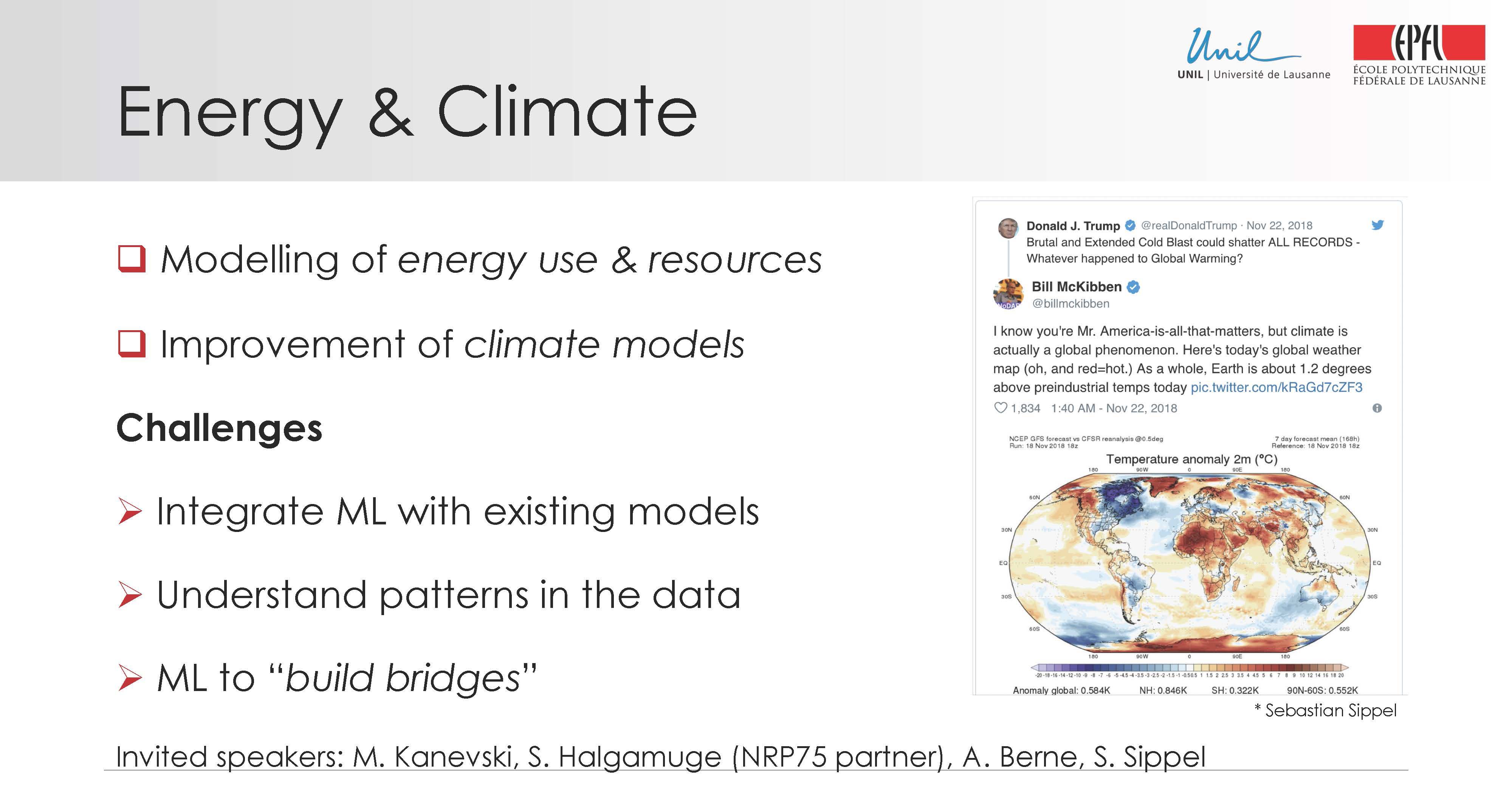
We started the second half of the track with Energy and Sustainability. Machine Learning has been applied to the forecasting and modelling of renewable energy resources, energy demand and energy storage, as well as the prediction of emissions for life-cycle analysis. The climate experts showed afterwards how existing climate models can be enhanced using ML. Our panel of experts actively discussed the role of Machine Learning in a field with strong and widely used physical models – which is the case in climate science, but also in energy research. Particularly due to its “black box” nature, ML algorithms cannot replace these models. However, they are suitable to expand and improve the models using observations and data. It is hence of highest importance to understand trends and patterns in the data, even before modelling. Our experts agreed that the role of Machine Learning in this field, which is still in its infant phase, is to build bridges – bridges between existing physical models that are easy to interpret and well understood, and the data that we collect from real-life observations.
If you want to know more about the event, about our track and about the other applications of AI, you can visit the website of AMLD:
https://www.appliedmldays.org